Acte Premier: the Warme Scholen project
The project began with a clear goal: to enable schools to efficiently distribute forms to multiple stakeholders. The existing platform, however, was overly complex and lacked intuitive guidance, making it difficult for users to achieve their objectives.
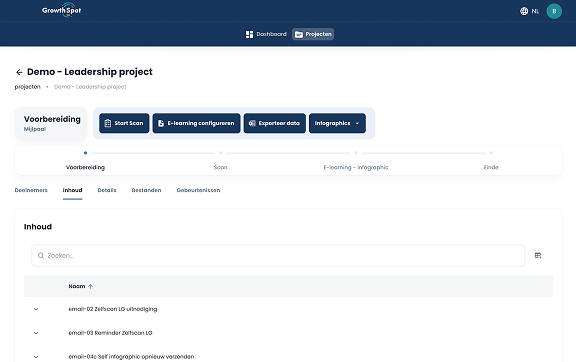
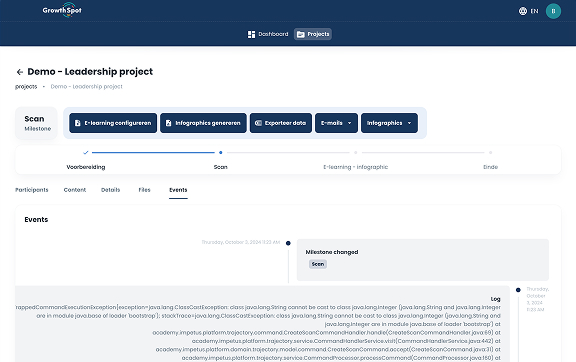
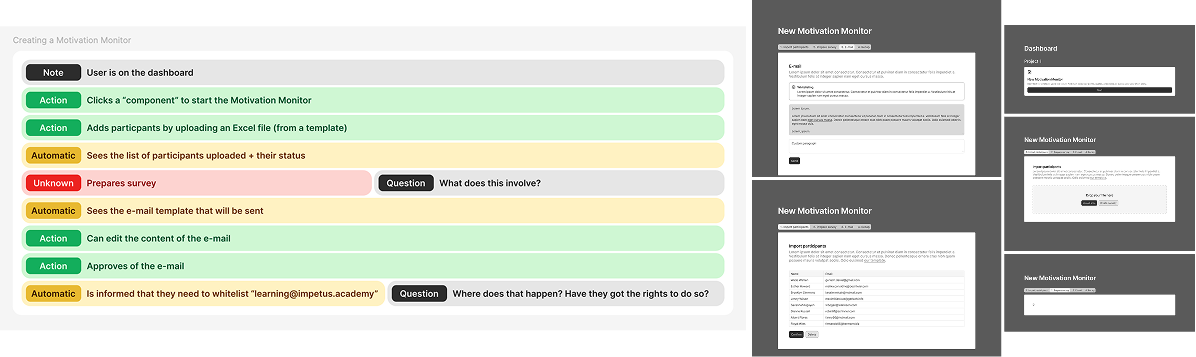
To map out all the needs, I initiated the process with low-fidelity wireframes and detailed annotations, identifying pain points and gaps in the existing system. This approach allowed us to align expectations and establish a clear base for the next steps.
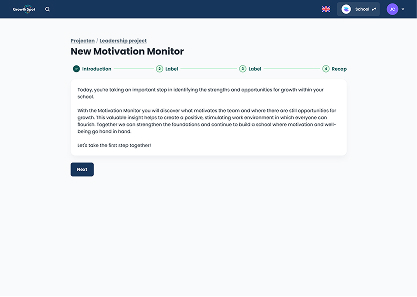
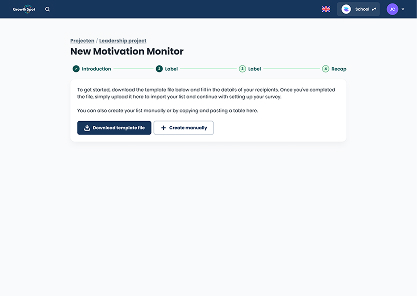
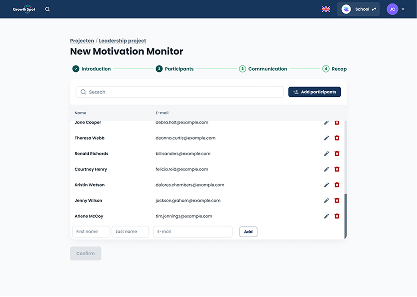
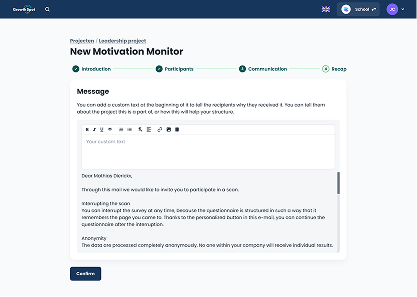
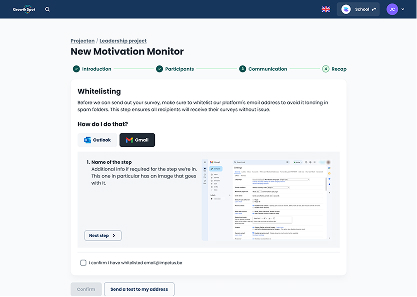
I was given a limited set of components and a small color palette to keep. I designed a five-step, user-friendly flow focused for respondants. This design was validated through user testing and approved for implementation.
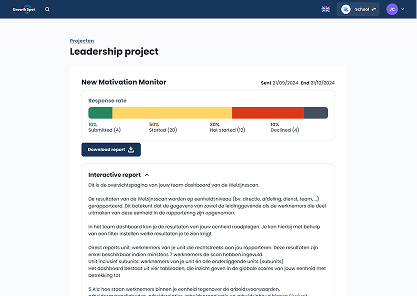
Acte Deux: expanding the possibilities
Happy with how the project turned out, the client wanted to expand the project’s scope. This meant redesigning the entire platform to accommodate four distinct user roles, including new sections for creating bespoke trainings, managing users, and assessing participation and success.
With requirements still evolving, I adopted an agile, iterative approach. We would meet weekly with stakeholders to present progress, gather feedback, and discuss next steps. One of the early challenges was defining a shared language for the platform: terms like "module," "track," and "e-learning" were often used interchangeably. Through discussions and visual explorations, we aligned on terminology.
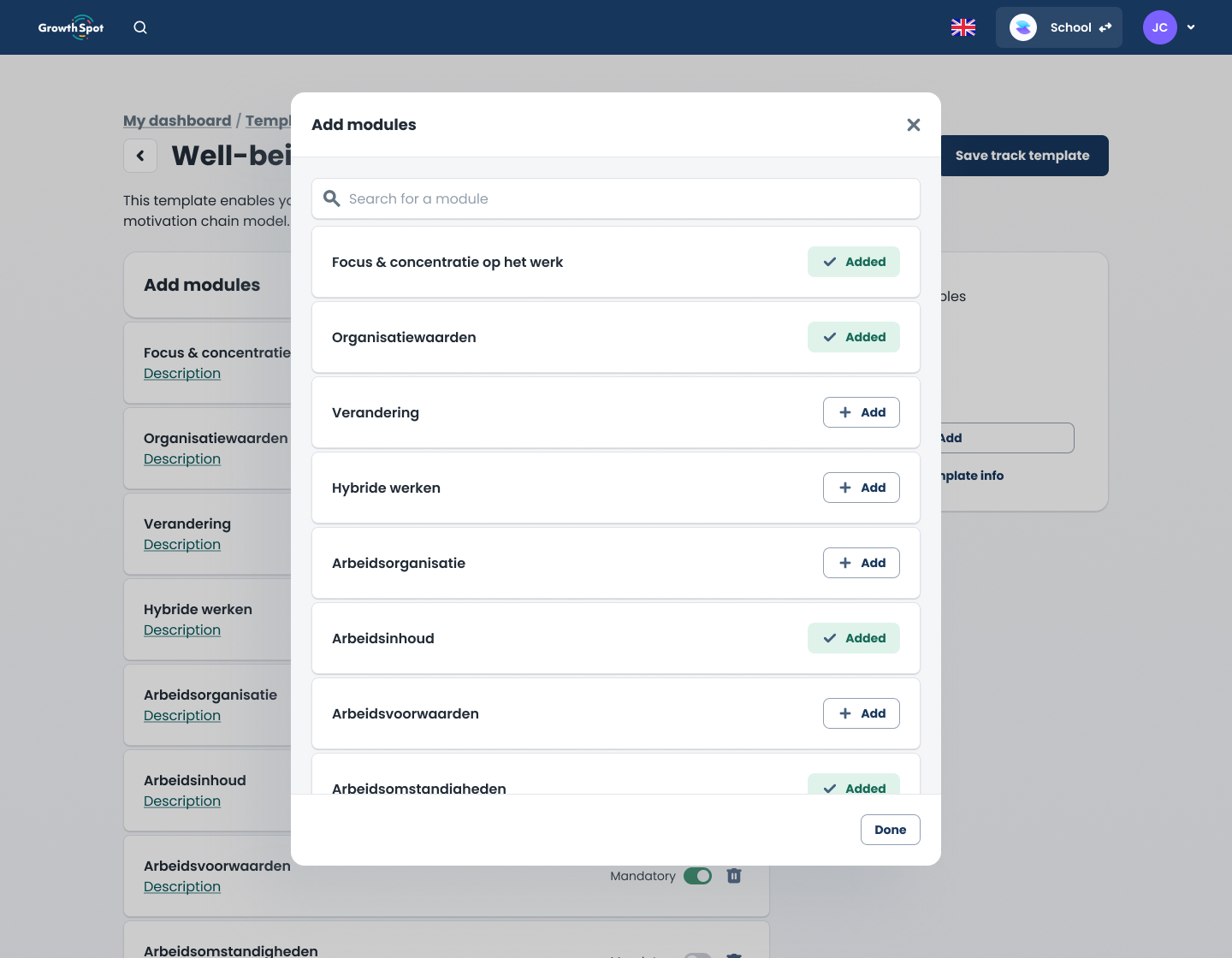
In the end, we defined that a "track" could include:
- Modules (with optional themes)
- A list of participants
- Benchmarking tools (for companies to track progress or allow comparisons)
- Custom word replacements (to match organizational terminology)
- Customizable communication templates
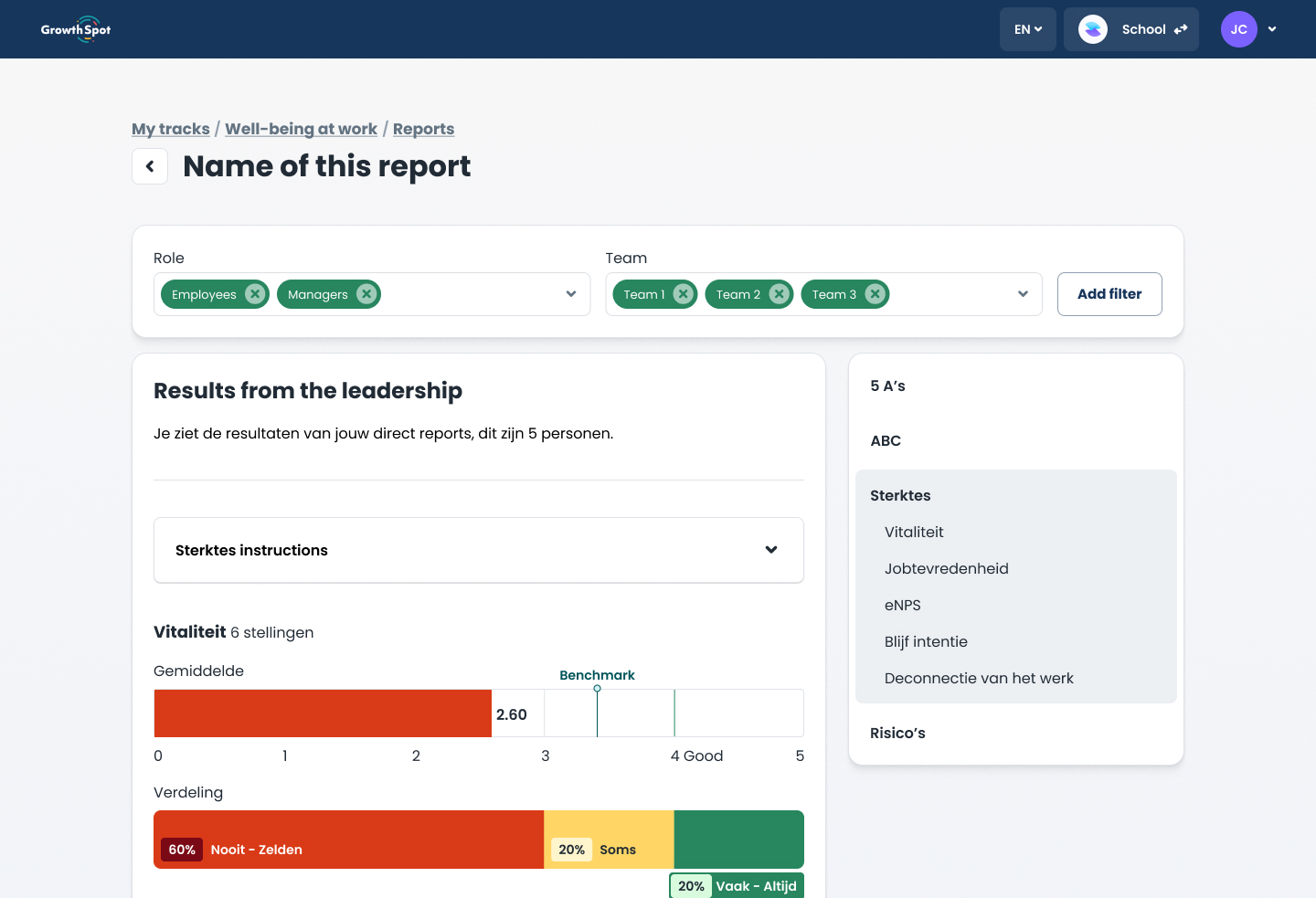
- Customizable reports
- A selection of e-learnings
Because the consultant role would cover most features, we began there, so that future screens would be easier to design. This phased approach allowed us to keep designing while maintaining flexibility for new requirements.
As features accumulated, I took a step back and reorganized the platform’s structure to make sure they made sense as a whole and that the platform did not become a list of technical possibilities. The consultant flow ultimately included:
- A client/track dashboard
- Client and participant management
-
Track customization
- Modules
- Benchmarks
- Word replacements
- Communication customization
- Report customization
- Participation and results tracking
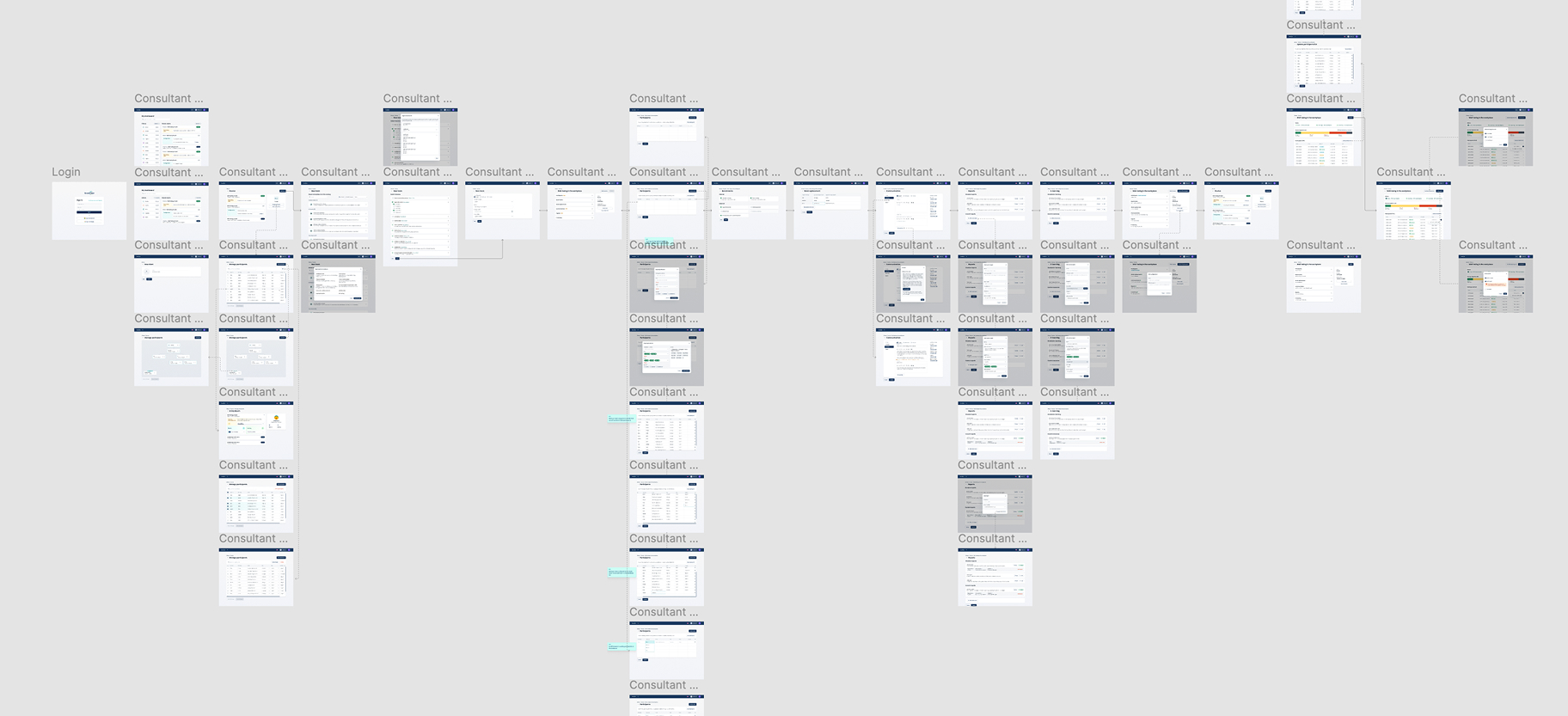
With the consultant flow established, I then designed experiences for creators (who build tracks and templates) and participants (the end users). A key question was: "How far should creators be able to create content?" Because Impetus' core knowledge is providing trainings, I argued that the priority should be to provide strong, science-based and ready to use templates while still allowing creators to build their own resources.
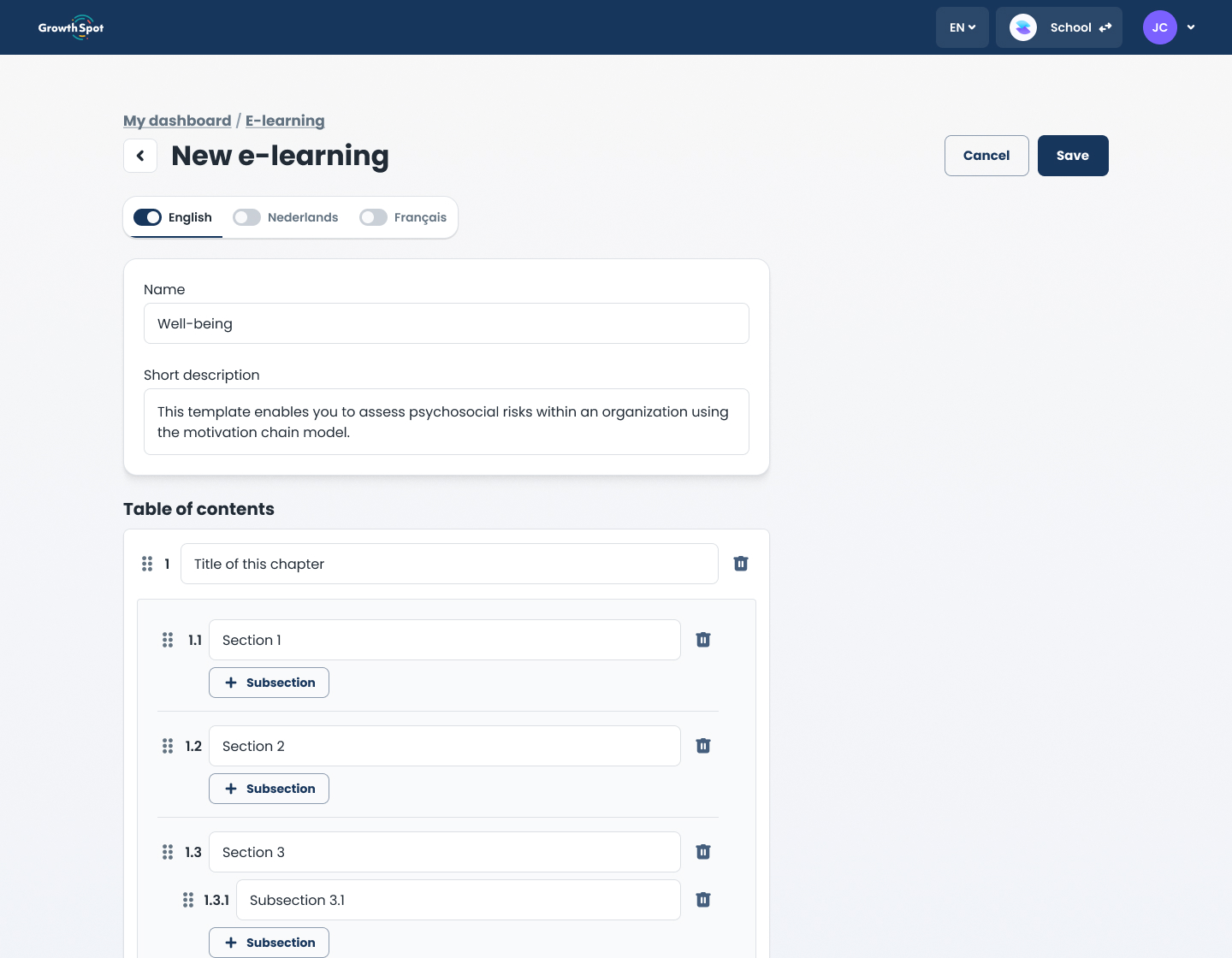
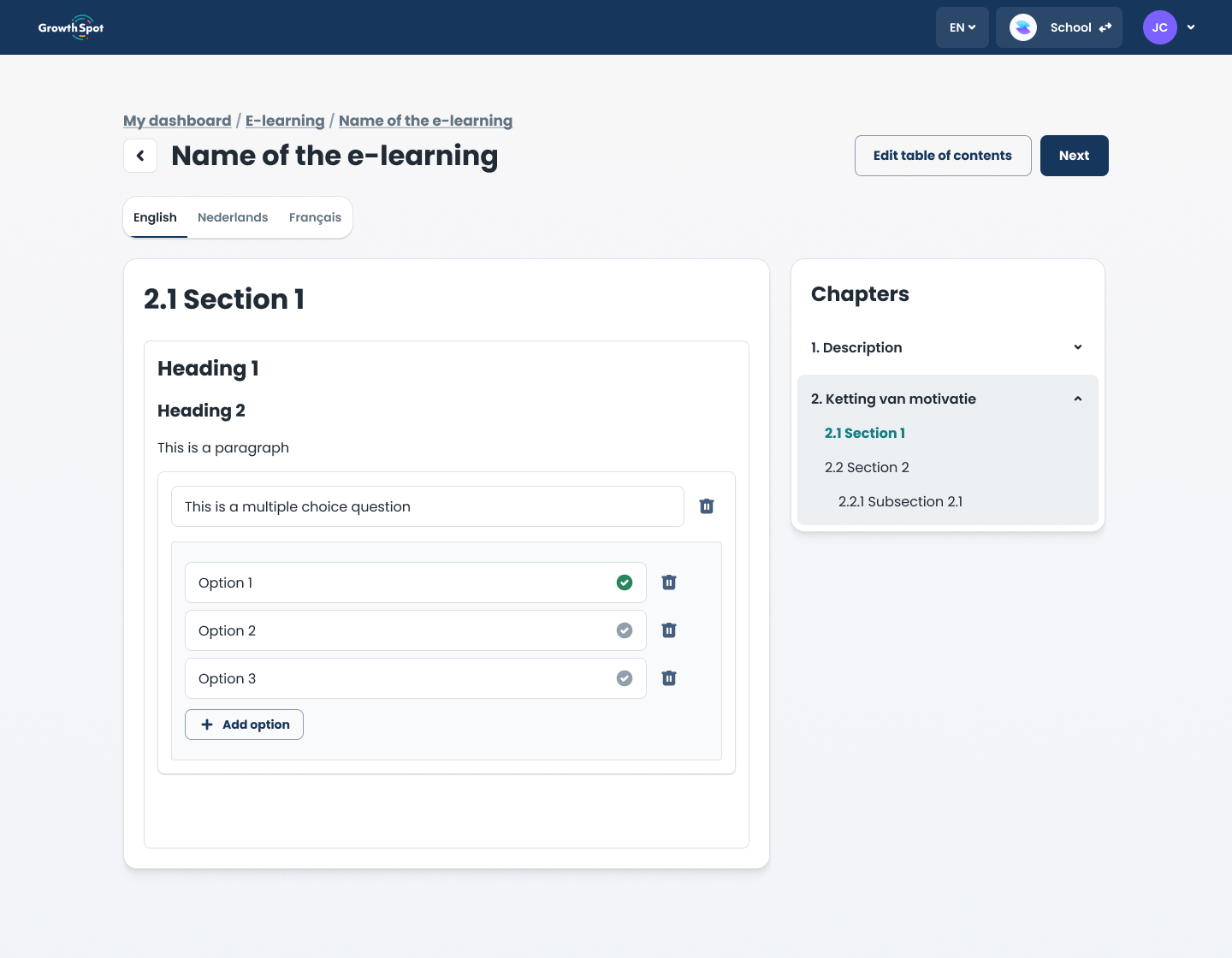
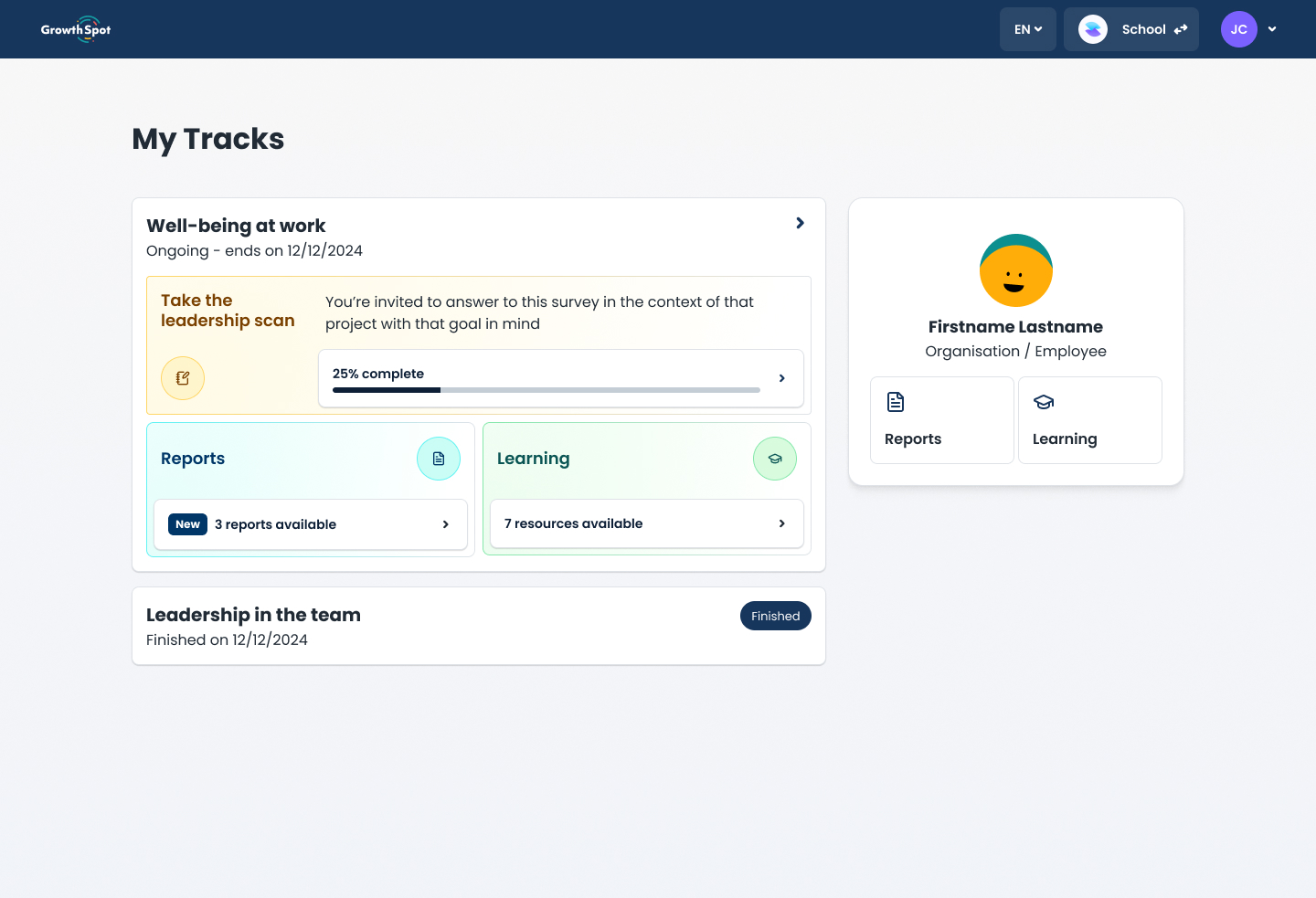
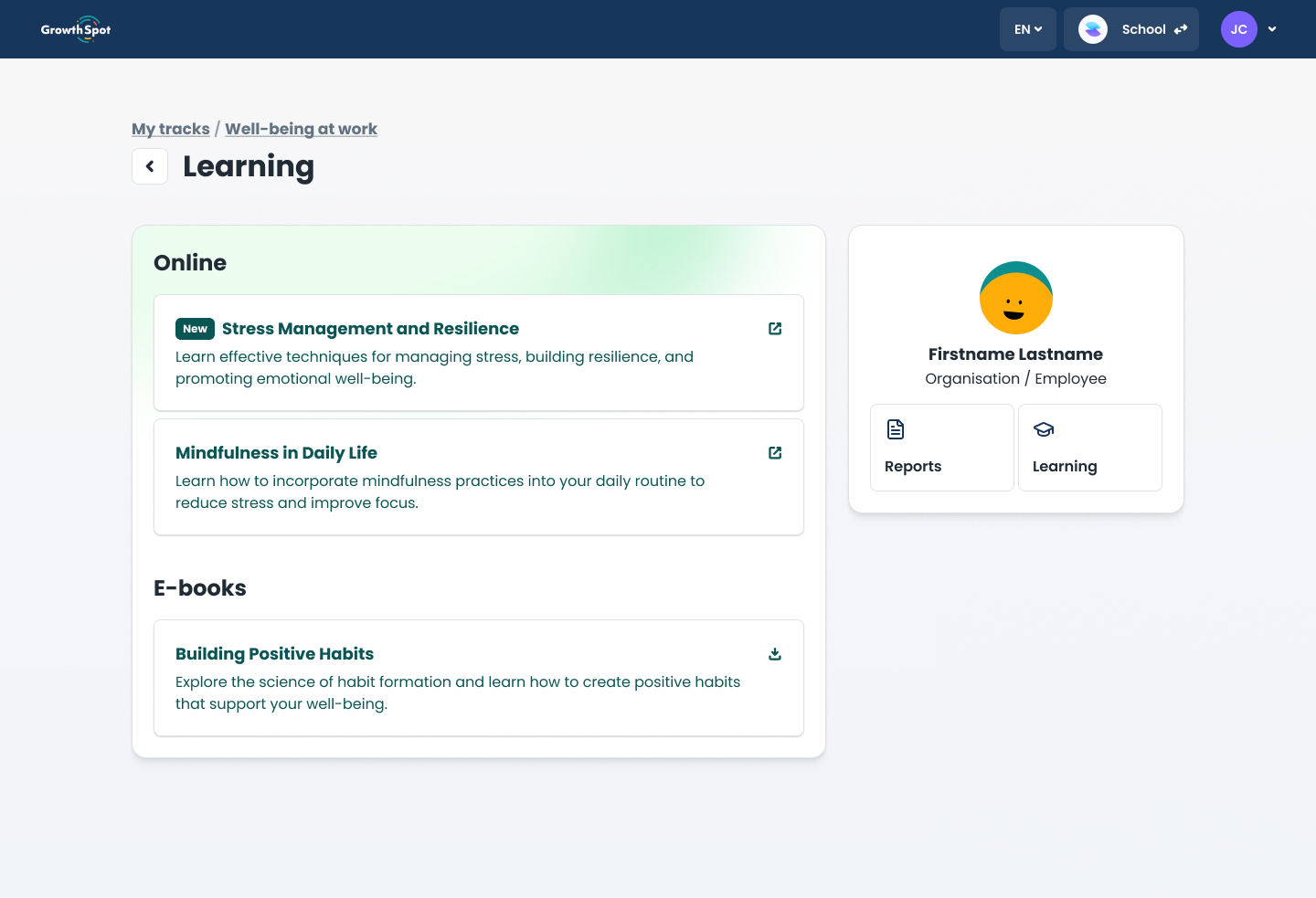
The participants would essentially see the finished version of whatever had been setup by a consultant. This got bundled into a home view where they can access their available scans, learning or reports. This role also required the design of forms and a very basic learning platform as well as the reports themselves.
Reflections on project management
While the initial vision was unclear and stakeholder priorities would shift, we structured the process to deliver incremental value. We would ensure that each step would be built logically on the last. This way and working with iterative feedback, we transformed a fragmented set of ideas into a structured, scalable platform.